Technical Deep-Dive
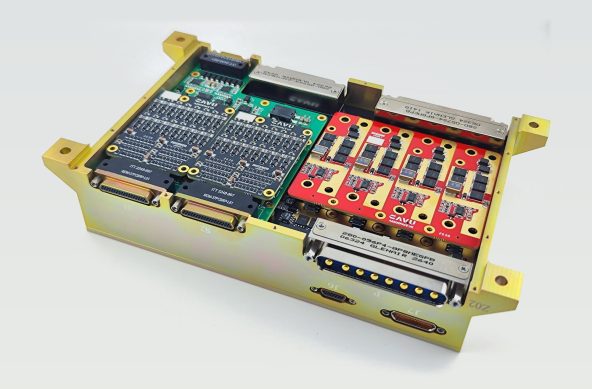
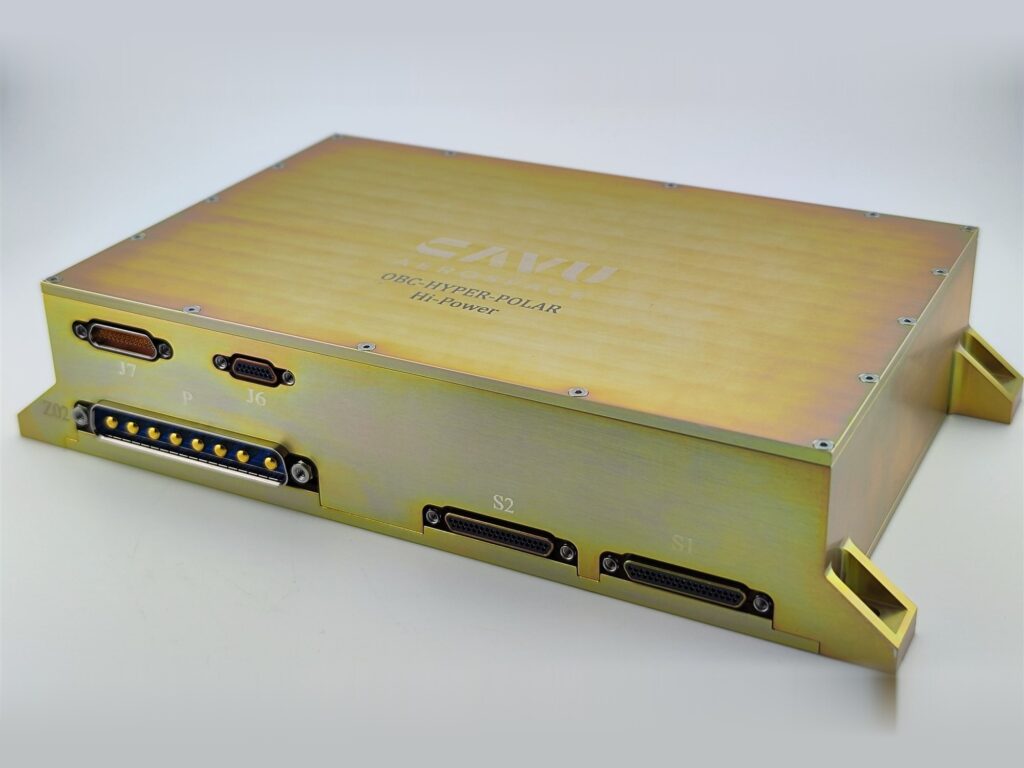
The add-on card is where the flight computer meets the hardware: the layer between the OBC and everything on the vehicle that has to be measured or moved.
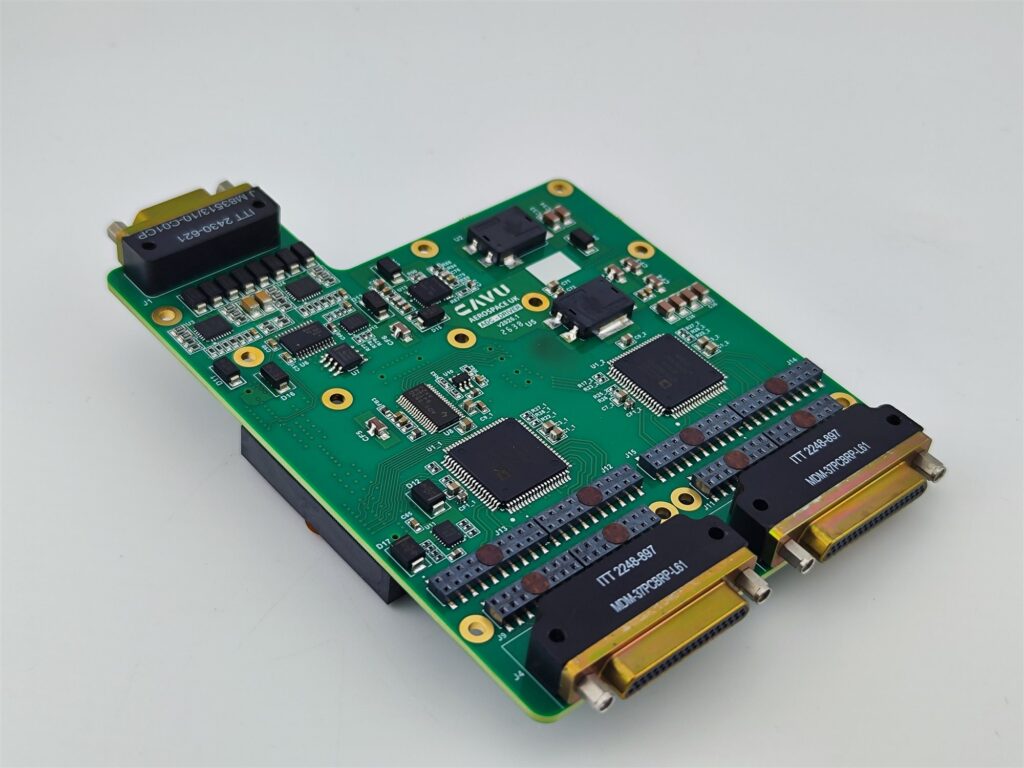
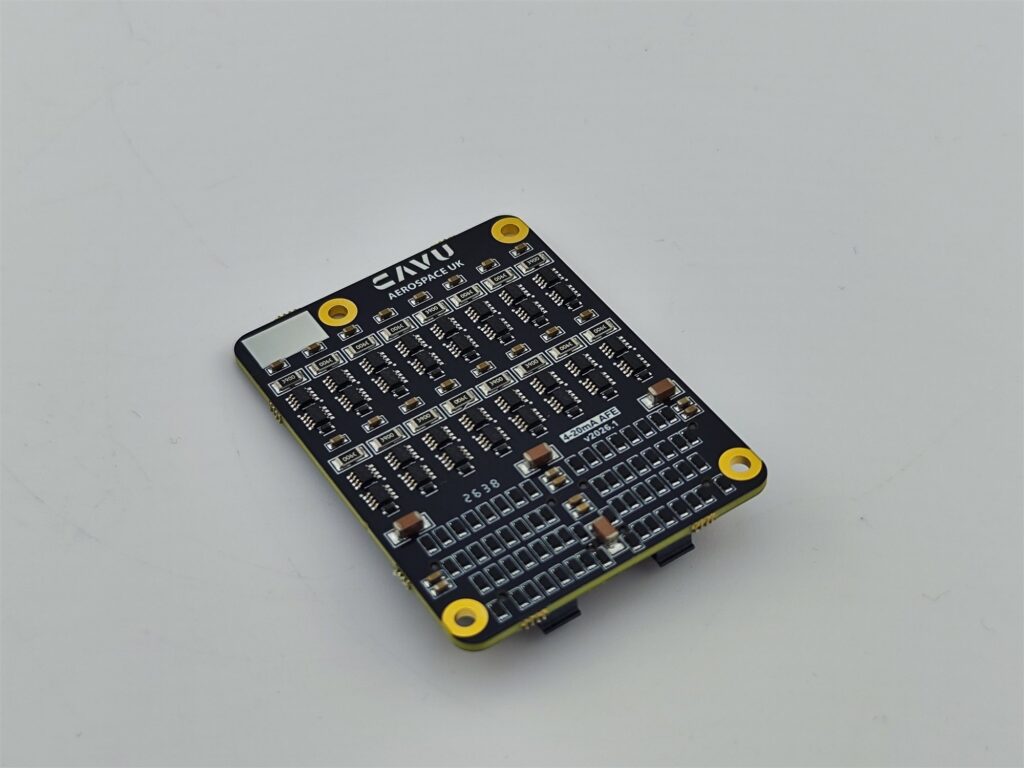
Sensing. Twenty 4–20 mA pressure transducers report the state of the propulsion system, digitised by two 16-channel ADCs: 32 channels, 20 in use and 12 held in reserve. Alongside them, 4–5 decoupled temperature channels run on a sigma-delta ADC at 1–10 Hz. Each channel accepts a thermocouple with cold-junction compensation, a thermistor or a 4–20 mA sensor, so the sensor choice can stay open late in the design.
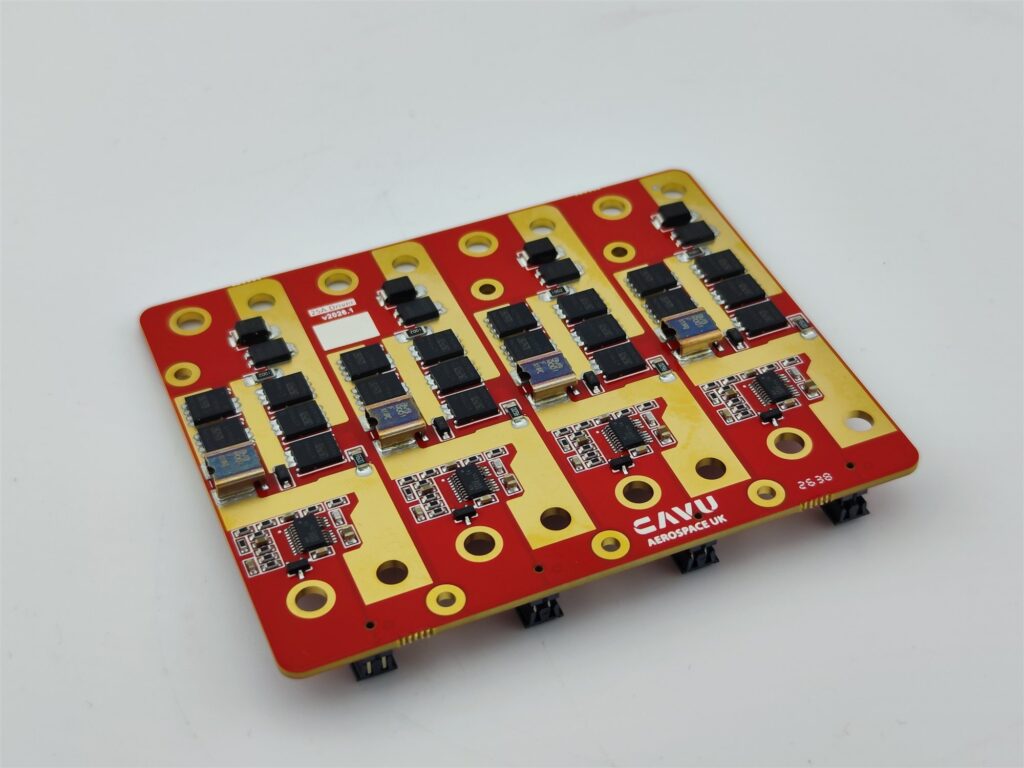
Actuation. Smart high-side drivers switch 8 solenoid valves at 24 V / 4 A, and 6 more protected outputs serve auxiliary loads. The toughest job belongs to the 4 thrust vector control (TVC) actuators: each one pulls a 45 A inrush within 100 µs, so each gets its own hot-swap and precharge control and a dedicated hold-up capacitor bank, keeping the bus steady when the actuators fire.
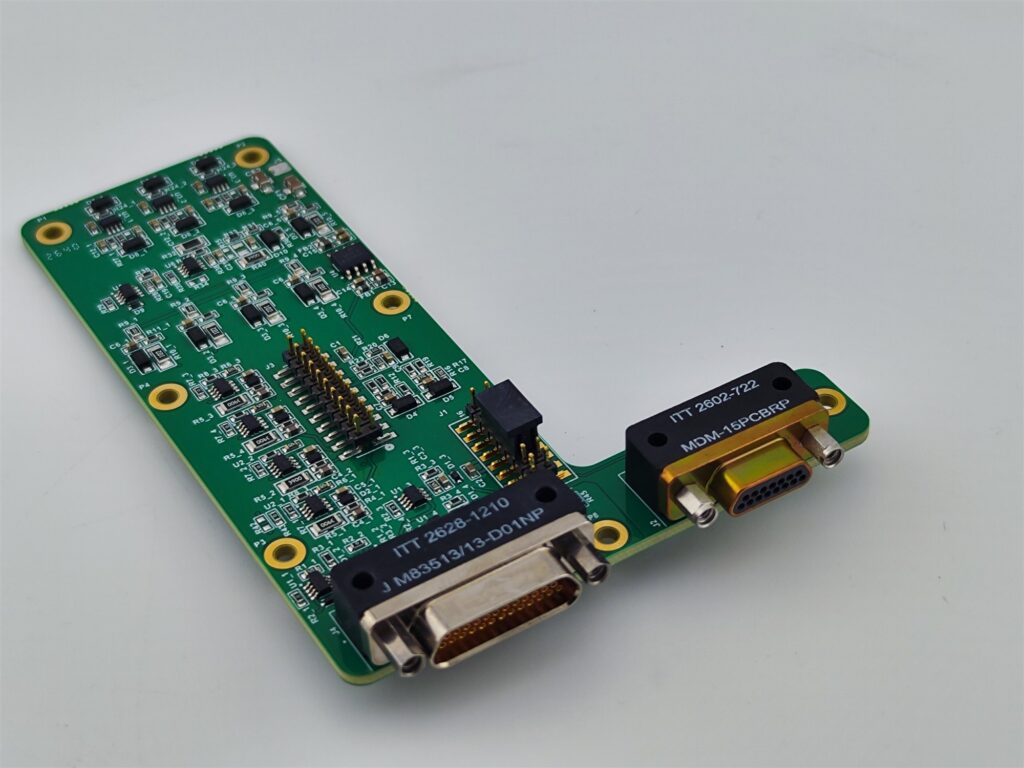
Power and link. Separate 24 V and 36 V buses come in through input filtering and TVS protection, and a single board-to-board connector carries 56 GPIO lines at 3.3 V, single-ended or differential, straight into the PolarFire SoC.